
Cheap Car Insurance for Multiple Vehicles — New Mexico
Free to compare
When Adding a Second Car Doesn't Lower Your Rate
You bought a second car, called your carrier to add it to your existing New Mexico policy, and expected the multi-car discount to drop your premium. Instead, your rate went up more than you anticipated, and the discount never appeared. The problem isn't the carrier—it's the policy structure. The multi-car discount requires every vehicle on the same policy, garaged at the same address, and titled in a way the carrier can verify as one household. If the second car is titled to a household member on a different policy, or if it's garaged at a different address for work or school, the discount doesn't apply.
New Mexico requires $25,000 bodily injury per person, $50,000 per accident, and $10,000 property damage as minimum liability coverage. That requirement applies to the policy, not to each car individually. When you add a vehicle mid-term, the carrier re-rates the entire policy—your base rate, your coverage selections, and your household's driving records—then applies any discount you qualify for. The multi-car discount is one of the largest available, but it's conditional. Understanding what triggers it and what blocks it is the difference between a policy that saves money and one that doesn't.
“A smaller discount on a lower base rate can beat a larger discount on a higher base rate—you won't know until you compare actual quotes.”

See What New Mexico Drivers Pay for the Coverage They Need
Get My New Mexico Car Insurance Quote$25,000 / $50,000 / $10,000
New Mexico Liability Minimum
New Mexico law requires every auto policy to carry at least $25,000 bodily injury per person, $50,000 per accident, and $10,000 property damage. These limits apply to the policy as a whole, covering every vehicle listed on it.
New Mexico Taxation & Revenue Department, Motor Vehicle Division
What the Multi-Car Discount Actually Requires
The multi-car discount is not automatic. It applies only when every vehicle you want covered sits on the same policy, is garaged at the same address, and is titled in a way the carrier recognizes as belonging to one household. If you and your spouse each have separate policies and you add a third car to one of them, that policy may qualify for the discount—but the other policy won't, and your combined household premium may still be higher than if you merged both policies into one.
Carriers verify garaging address and title ownership before applying the discount. A car titled to a college-age child living at a different address may not qualify, even if the child is listed as a driver on your policy. A vehicle registered to a business, even if you drive it personally, may not qualify. A car garaged at a second home or work location may not qualify. The discount is tied to household structure, not just vehicle count.
Not every carrier writes the same multi-car discount. Some apply a percentage reduction to the second vehicle's premium; others reduce the base rate for the entire policy. Some require at least two vehicles; others require three before the discount kicks in. The only way to know which structure saves you the most is to compare quotes from carriers writing in New Mexico with your exact household configuration: how many cars, how many drivers, where each car is garaged, and who holds the title.
New Mexico does not use SR-22 or any insurer-filed certificate. Compliance runs through the Mandatory Financial Responsibility Act: you carry the state's minimum liability or post a $60,000 surety bond with the State Treasurer. The MVD tracks insurance electronically. If you let coverage lapse on any vehicle on your policy, the MVD is notified, and your registration can be suspended. That means every car on your multi-car policy must stay continuously insured—you can't drop coverage on a rarely-driven vehicle to save money without triggering a compliance issue.
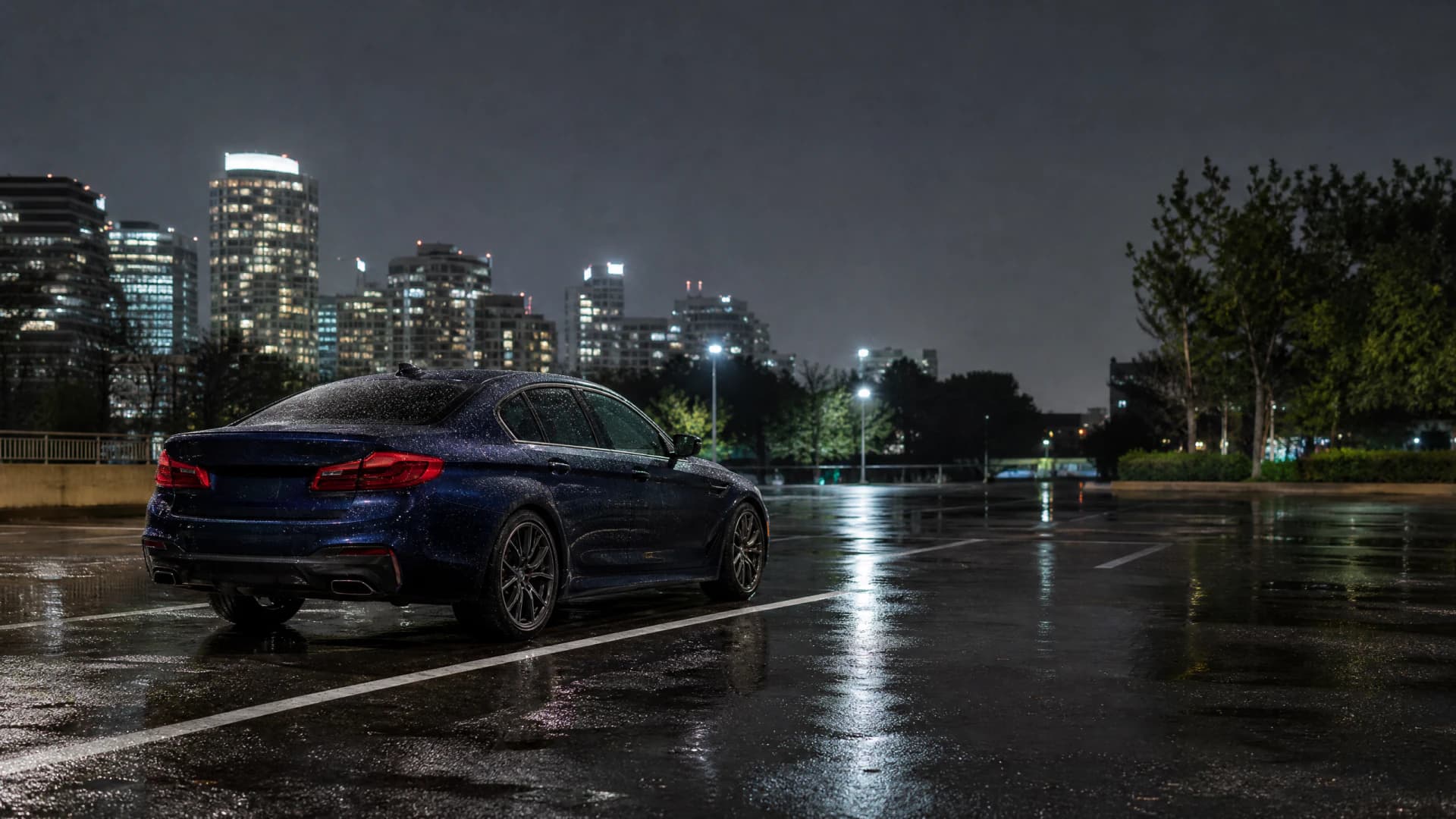
The multi-car discount only applies when every vehicle is on the same policy, garaged at the same address, and titled in a way the carrier can verify as one household.





When Combining Policies Costs More Than Keeping Them Separate
Combining two existing policies into one multi-car policy does not always lower your total premium. If one driver has a clean record and the other has a recent violation, the combined policy re-rates both drivers together. The clean driver's rate goes up; the high-risk driver's rate may go down, but the net household premium can be higher than keeping two separate policies. This happens most often when spouses merge policies after marriage, or when an adult child moves back home with a car and a poor driving record.
Run the comparison both ways. Get a quote for one combined policy with every vehicle and every driver. Then get quotes for two separate policies—one for the clean-record driver with their vehicle, one for the high-risk driver with theirs. Compare the total annual cost. If the combined policy is higher, keep them separate until the violation ages off the high-risk driver's record. New Mexico's MVD electronic insurance tracking does not require you to combine policies—it only requires that every vehicle carries continuous coverage meeting the state minimum.
The same logic applies to coverage levels. If one car is financed and requires full coverage (comprehensive and collision), and the other is paid off and you want to carry only liability, you can structure those coverage selections on one multi-car policy. But if the lender's full-coverage requirement pushes your premium higher than you expected, compare the cost of a separate policy for the financed car with full coverage and a second policy for the paid-off car with liability only. The multi-car discount may not offset the cost of carrying full coverage on a vehicle you would otherwise insure at the minimum.
24.1%
New Mexico Uninsured Motorist Rate
Nearly one in four drivers in New Mexico operates without insurance. That rate is among the highest in the country and makes uninsured motorist coverage a practical consideration for multi-car households, even though the state does not mandate it.
Insurance Research Council, 2023
Coverage Decisions Across Multiple Vehicles
New Mexico does not require uninsured motorist coverage, but with 24.1% of drivers operating without insurance, adding it to a multi-car policy is a decision worth weighing. Uninsured motorist coverage pays when the at-fault driver has no insurance or insufficient limits to cover your damages. On a multi-car policy, you can select uninsured motorist limits once, and they apply to every vehicle on the policy. That makes it more cost-efficient than adding it separately to multiple single-car policies.
Comprehensive and collision are optional unless a lender requires them. On a multi-car policy, you can select different coverage levels for each vehicle. A newer financed car can carry full coverage with a low deductible; an older paid-off car can carry liability only. The multi-car discount applies to the policy as a whole, so dropping full coverage on one vehicle doesn't eliminate the discount—it just reduces your premium for that car. Compare the cost of full coverage on each vehicle against the car's current value. If the car is worth less than ten times your annual comprehensive and collision premium, dropping those coverages and banking the savings often makes more financial sense than continuing to insure a low-value vehicle at full coverage.
Compare Carriers Writing Multi-Car Policies in New Mexico
Eighteen carriers write auto insurance in New Mexico, and not all of them structure multi-car policies the same way. State Farm, Geico, Progressive, Allstate, Farmers, and Nationwide all write multi-car policies and advertise multi-car discounts, but the size of the discount, the underwriting rules, and the base rate vary. A carrier with a high base rate and a large multi-car discount may still cost more than a carrier with a lower base rate and a smaller discount. The only way to know is to compare quotes with your exact household configuration: number of vehicles, drivers, garaging address, and coverage selections.
Request quotes from at least three carriers. Provide identical information to each so you're comparing the same coverage. Ask each carrier explicitly whether your household qualifies for the multi-car discount and how much it reduces your premium. If one carrier quotes you a rate without the discount, ask why—it may be a title issue, a garaging-address mismatch, or an underwriting rule you can fix by restructuring the policy. Once you have three quotes, compare the total annual premium, not just the monthly payment. A lower monthly payment spread over twelve months can cost more annually than a higher monthly payment spread over six.
How to Structure a Multi-Car Policy in New Mexico
Start by confirming every vehicle you want on the policy is titled to someone in the household and garaged at the same address. If a car is titled to a household member living elsewhere—say, a college student with an apartment in another city—call the carrier before adding it. Some carriers allow students away at school to remain on the family policy if the car is garaged at the family address during breaks; others require a separate policy. If the car stays at school year-round, it may not qualify for the family policy's multi-car discount, and you may pay more trying to force it onto one policy than you would writing two.
Next, compare how each carrier structures the discount. Call or quote online with at least three carriers writing in New Mexico. Provide the same information to each: number of vehicles, garaging address, drivers on the policy, and coverage selections. Ask explicitly whether the multi-car discount applies to your configuration and how much it reduces your premium. Some carriers reduce the second vehicle's rate by a percentage; others reduce the base rate for the entire policy. A smaller discount on a lower base rate can beat a larger discount on a higher base rate—you won't know until you compare actual quotes, not advertised discount percentages.
Get Your Free Quote
Get My New Mexico Car Insurance QuoteFrequently Asked Questions
Does New Mexico require insurance on every car I own?
Yes. New Mexico's Mandatory Financial Responsibility Act requires every registered vehicle to carry at least $25,000 bodily injury per person, $50,000 per accident, and $10,000 property damage. The MVD tracks insurance electronically, and letting coverage lapse on any vehicle triggers a compliance issue that can suspend your registration.
Can I insure two cars on one policy if they're titled to different people?
It depends on the carrier's underwriting rules. Most carriers allow spouses or household members living at the same address to insure vehicles on one policy, even if the titles are separate. If the second person lives at a different address, the carrier may require a separate policy. Call the carrier with your specific household configuration before adding the vehicle.
Will adding a second car to my policy automatically lower my rate?
No. Adding a second car re-rates your entire policy based on the new vehicle, your household's driving records, and your coverage selections. The multi-car discount applies only if every vehicle is on the same policy and garaged at the same address. If the second car is titled to someone on a different policy or garaged elsewhere, the discount won't apply, and your rate may go up.
Can I drop full coverage on one car and keep it on another on the same policy?
Yes. On a multi-car policy, you can select different coverage levels for each vehicle. A financed car can carry comprehensive and collision; a paid-off car can carry liability only. The multi-car discount applies to the policy as a whole, so dropping full coverage on one vehicle doesn't eliminate the discount.
Is uninsured motorist coverage required in New Mexico?
No. New Mexico does not mandate uninsured motorist coverage, but 24.1% of drivers in the state operate without insurance. Adding uninsured motorist coverage to a multi-car policy covers every vehicle on the policy under one set of limits, making it more cost-efficient than adding it separately to multiple single-car policies.
What happens if I let coverage lapse on one car on my multi-car policy?
The MVD is notified electronically, and your registration for that vehicle can be suspended. New Mexico's electronic insurance tracking system monitors every vehicle on your policy. You cannot drop coverage on a rarely-driven car to save money without triggering a compliance issue—the vehicle must stay continuously insured or be unregistered.